‘Limyè Sou Mwen’: Photography program gives displaced Haitian girls a space to heal and create
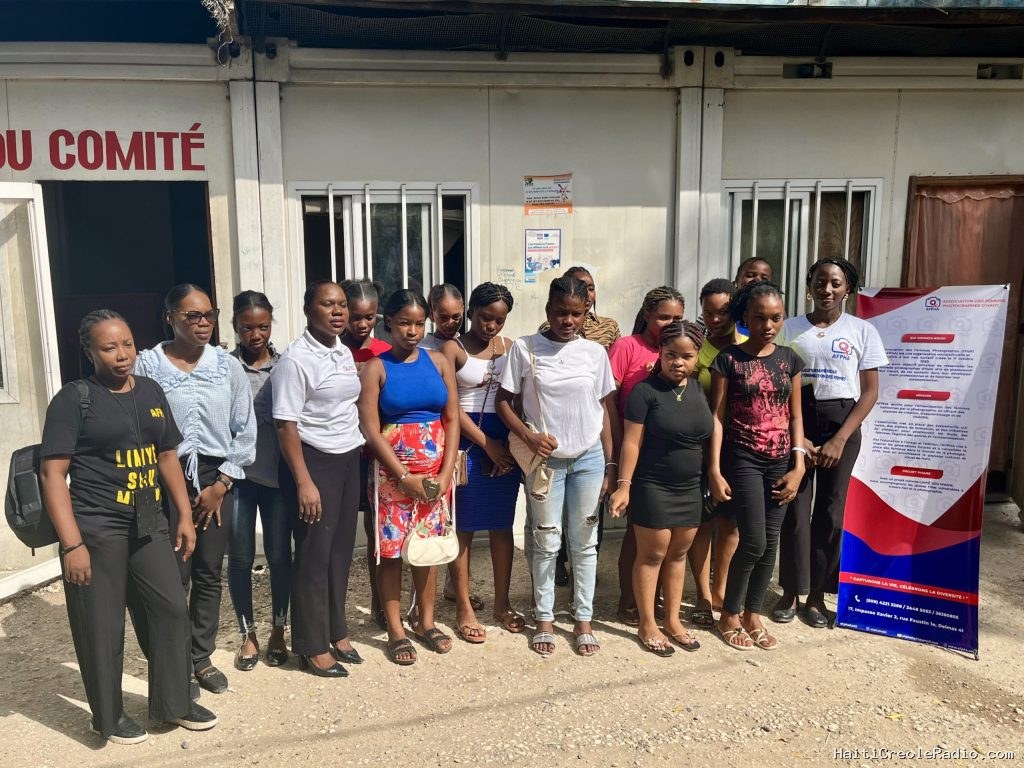
From Aug. 4 to 19, a group of 25 girls, ages 14 to 17, is participating in the training workshop, part of Haiti’s Photography Fortnight. At the end of the 15-day program, participants will receive certificates. They also will display their photographs in a showcase scheduled for World Photography
PORT-AU-PRINCE — At 16, Alexandrine Boivert knows what it means to lose a home, leave friends behind and begin again in a crowded displacement camp. She also knows what it means to discover something of her own.
After fleeing gang violence in Delmas 24, Boivert found a new outlet through photography. She became the outstanding graduate of the first edition of “Limyè Sou Mwen” — Haitian Creole for “Shine a Light on Me” — a program created by the Association of Women Photographers of Haiti (AFPHA) to teach photography to adolescent girls displaced by violence.
Now, she is encouraging a new group of girls to follow the same path.
“The experience was truly beautiful, and I think you will love it,” Boivert told participants at the Aug. 4 launch of the program’s second edition. “Photography is one of the most beautiful things. I used to think it was only for men, but once you get involved, you will understand that this isn’t true.”
“Anyone, regardless of age or gender, can practice it,” she added.
Boivert’s experience reflects the circumstances facing thousands of girls and women displaced by Haiti’s escalating gang violence. Many have fled homes destroyed or seized by armed groups and now live in overcrowded sites where privacy, security and access to basic services are limited.
The photography program cannot resolve those conditions, organizers say. But, they concur, it can give girls a safe space to learn, express themselves and begin developing a skill that could eventually provide an income.
Alexandrine Boivert, 16, an outstanding graduate of the first edition of the “Limyè sou Mwen” photography training project, speaks at the launch of the second edition at the Doctors Without Borders displacement camp in Delmas 33, Port-au-Prince, Tuesday, Aug. 4, 2026. Photo by Juhakenson Blaise/The Haitian Times.
From displacement to photography
From Aug. 4 to 19, a group of 25 girls, ages 14 to 17, is participating in the training workshop, part of Photography Fortnight— an annual activity held by Haitian women photographers to celebrate World Photography Day.
The participants live in displacement camps in the Port-au-Prince metropolitan area, including sites managed or supported by Doctors Without Borders (MSF) and Haiti’s ministries of Public Works and Social Affairs.
Professional photographers from AFPHA are teaching them the fundamentals of photography. The free program also includes psychosocial support, recreational activities and visits to different locations.
The teenage girls were selected by camp managers, with parental consent required for participation.
At the end of the 15-day program, participants will receive certificates. They also will display their photographs in a showcase scheduled for World Photography Day on Aug. 19.
One participant will receive a full scholarship to attend a local photography school based on assessments conducted throughout the training.
Sarah Mondésir Joseph, AFPHA’s president, said the program is intended to give displaced girls more than a temporary activity.
“Although they are living in displacement camps and do not yet know when they will be able to return home, it is important to equip children with a profession from a very young age,” Joseph said. “What you give them as a profession, they can use it to earn money and to express what they feel.”
Sarah Mondésir Joseph, president of the Association of Women Photographers of Haiti, speaks at the press conference marking the launch of the second edition of the “Limyè Sou Mwen” photography training program at the Doctors Without Borders displacement camp in Delmas 33, Port-au-Prince, on Tuesday, Aug. 4, 2026. Photo by Juhakenson Blaise/The Haitian Times.
For Boivert, the first edition already provided evidence that such an opportunity can make a difference.
She arrived at the program as a displaced teenager uncertain about her future. She left with a new skill, a certificate and recognition as the program’s outstanding graduate.
Now she is passing the lesson to the next generation of girls.
Her circumstances have not changed completely. But neither has her determination to create something from what remains.
Girls facing heightened risks
The program comes as Haiti’s gang violence has forced hundreds of thousands of people from their homes and left displaced families living in increasingly difficult conditions.
For girls and women, displacement has brought additional risks. Crowded shelters and makeshift camps often provide limited privacy and inadequate protection, while access to health care, education and other essential services remains constrained.
The United Nations has documented grave violations against children— mostly girls— in Haiti, including sexual violence. In 2025, the U.N. verified 166 cases of sexual violence against children, 164 of them involving girls.
Those figures represent verified cases, not the full scale of abuse. Sexual violence is frequently underreported, particularly when survivors face stigma, insecurity or limited access to services.
For girls who have already witnessed or experienced violence, displacement can compound the psychological effects of losing their homes and communities.
Boivert knows that reality firsthand.
She lives with her mother and two sisters in a displacement camp after fleeing her neighborhood. The camp has become her home, even though the circumstances remain precarious.
The photography program gave her an opportunity to look beyond those circumstances.
“It taught me to believe in myself,” she said.
For Joseph, that element of the program is as important as the technical training.
The girls will have access to psychologists and psychotherapists during the program, along with other psychosocial activities, the APHA president told reporters.
The combination of creative work and psychosocial support is intended to help participants process difficult experiences while developing confidence and practical skills.
“These 15 days will be filled with learning, fun activities and visits to different places,” Joseph said. “As the training progresses, they will also have access to therapy sessions. We encourage them to use what they learn.”
Related
I am Juhakenson Blaise, a journalist based in the city of Port-au-Prince, Haiti. I cover the news that develops in this city and deals with other subjects related to the experience of Haitians for the Haitian Times newspaper. I am also a lover of poetry.





Commentaires (0)
Laisser un commentaire
Aucun commentaire. Soyez le premier !