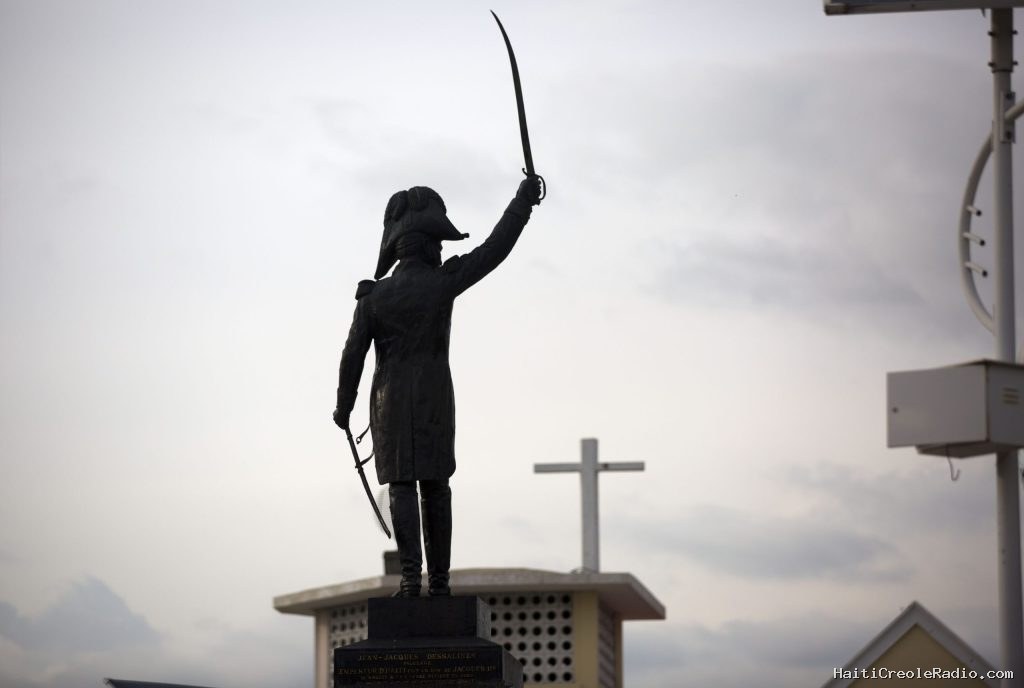
Today in history: Jean-Jacques Dessalines, father of Haiti’s independence, is assassinated
Dessalines was more than a military commander. He was a central figure in the Haitian Revolution, the uprising that transformed an enslaved population into a force capable of defeating a colonial power and founding a nation. The post Today in history: Jean-Jacques Dessalines, father of Haiti’s ind
Editor’s note:This story is part of our “Today in History” series, where The Haitian Times revisits pivotal moments that shaped Haiti and its diaspora.
On Oct. 17, 1806, Jean-Jacques Dessalines, Haiti’s first head of state after independence, was assassinated near Pont-Rouge, north of Downtown Port-au-Prince. His death marked a turning point in the country’s early history, ending the rule of a revolutionary leader who helped defeat French colonial forces, abolish slavery and establish an independent nation.
Dessalines was more than a military commander. He was a central figure in the Haitian Revolution, the uprising that transformed an enslaved population into a force capable of defeating a colonial power and founding a nation. His legacy remains inseparable from Haiti’s independence — and from the enduring debate over how freedom should be exercised, protected and shared.
From slavery to revolution
Born into slavery in the French colony of Saint-Domingue around 1758, Dessalines grew up under a colonial system built on forced labor, racial hierarchy and violence. The colony’s plantation economy generated enormous wealth for France while subjecting enslaved Africans to brutal exploitation.
The revolution that began in 1791 challenged that system. Dessalines joined the struggle and rose through the ranks of the revolutionary army, serving alongside leaders including Toussaint Louverture. He became known for his military resolve and commitment to defeating French efforts to retain control of the colony.
After French forces captured and deported Louverture to France in 1802, where he died in captivity about a year later. Dessalines emerged as a leading commander against the expeditionary forces sent by Napoleon Bonaparte to reassert French authority. The campaign threatened the gains of emancipation and raised fears that slavery would be restored.
Dessalines and other revolutionary leaders continued the fight. The decisive Battle of Vertières on Nov. 18, 1803, helped secure the French defeat. On Jan. 1, 1804, Dessalines proclaimed Haiti’s independence, ending French colonial rule and establishing the world’s first independent Black republic.
The victory transformed global history. Haiti demonstrated that people subjected to slavery could overthrow a colonial regime, defeat a major military power and establish an independent state. Its independence became a landmark in the struggle against slavery and colonialism.
An uncompromising leader
For Dessalines, independence required more than a declaration. Haiti had to defend its sovereignty against foreign powers that might seek to reclaim the territory and restore the colonial system.
In 1804, he declared himself emperor, taking the name Jacques I. His government sought to consolidate the new nation and protect its independence, but his rule was also authoritarian, marked by concentrated power and harsh measures against perceived enemies.
One of the most contested aspects of his legacy is the 1804 massacre of most of the remaining French population in Haiti. The killings followed years of colonial violence and fears that France would attempt to restore slavery, but they also remain a painful part of the country’s founding history.
Dessalines’ leadership reflected the revolution’s central contradiction: the fight to secure freedom from a brutal colonial system unfolded through extraordinary violence, while the new nation’s rulers faced difficult questions about how to govern and distribute power.
His determination to protect Haiti’s independence helped shape the country’s founding. Yet tensions over his methods and the concentration of authority contributed to divisions among revolutionary leaders — divisions that intensified after his death.
The assassination that changed Haiti
By 1806, opposition to Dessalines had grown among influential military and political figures. Disputes over his rule, policies and concentration of power culminated in a conspiracy against him.
On Oct. 17, 1806, Dessalines was killed near Pont-Rouge. His assassination exposed deep divisions among leaders who had fought together to win independence.
The country soon fractured politically. Henri Christophe established a government in the north, while Alexandre Pétion led a republic in the south. Their competing governments reflected disagreements over leadership and the direction of the new nation.
The split underscored the challenges facing Haiti after its revolutionary victory. Defeating colonial rule had required extraordinary unity among military leaders, but building a stable nation raised difficult questions about governance, authority and the distribution of power.
Dessalines’ death did not undo the independence he helped secure. Haiti survived as a sovereign nation, and the declaration of 1804 remained a landmark in the global struggle against slavery and colonial domination.
Why Oct. 17 matters
Oct. 17 is not only the anniversary of a high-profile political assassination or a holiday in Haiti. It is an opportunity to remember the price Haitians paid to win their freedom and the revolutionary leader who helped turn that struggle into a nation.
Dessalines’ legacy calls for an honest reckoning. He was a liberator who helped defeat slavery and colonial rule, but he was also an authoritarian ruler whose methods and exercise of power remain subjects of historical debate. Remembering him fully means acknowledging both the scale of his achievement and the contradictions of his leadership.
For Haiti and its diaspora, the anniversary invites reflection on what independence means beyond freedom from foreign rule. It raises enduring questions about national unity, accountable leadership, sovereignty and whether the promise of freedom reaches ordinary Haitians.
On Oct. 17, 1806, Haiti lost one of the architects of its independence. The ideal he helped bring into existence — that Black people could overthrow slavery, defeat a colonial empire and govern themselves — outlived him.
Commemorating the day means honoring that revolutionary achievement while confronting the continuing work of making Haiti’s freedom meaningful for every generation.



Commentaires (0)
Laisser un commentaire
Aucun commentaire. Soyez le premier !