NEW YORK — A bitter congressional primary in Upper Manhattan has brought to light anti-Haitian rhetoric more common in conservative Dominican circle on Hispaniola to the city after Mayor Zohran Mamdani denounced the use of “Haitian” as a slur in political attacks against candidate Darializa Avila Chevalier.
The controversy erupted in New York’s 13th Congressional District after a senior adviser to incumbent Rep. Adriano Espaillat reportedly accused Avila Chevalier of helping turn Washington Heights into a “bastion of the Haitian, Muslim community,” according to City & State.
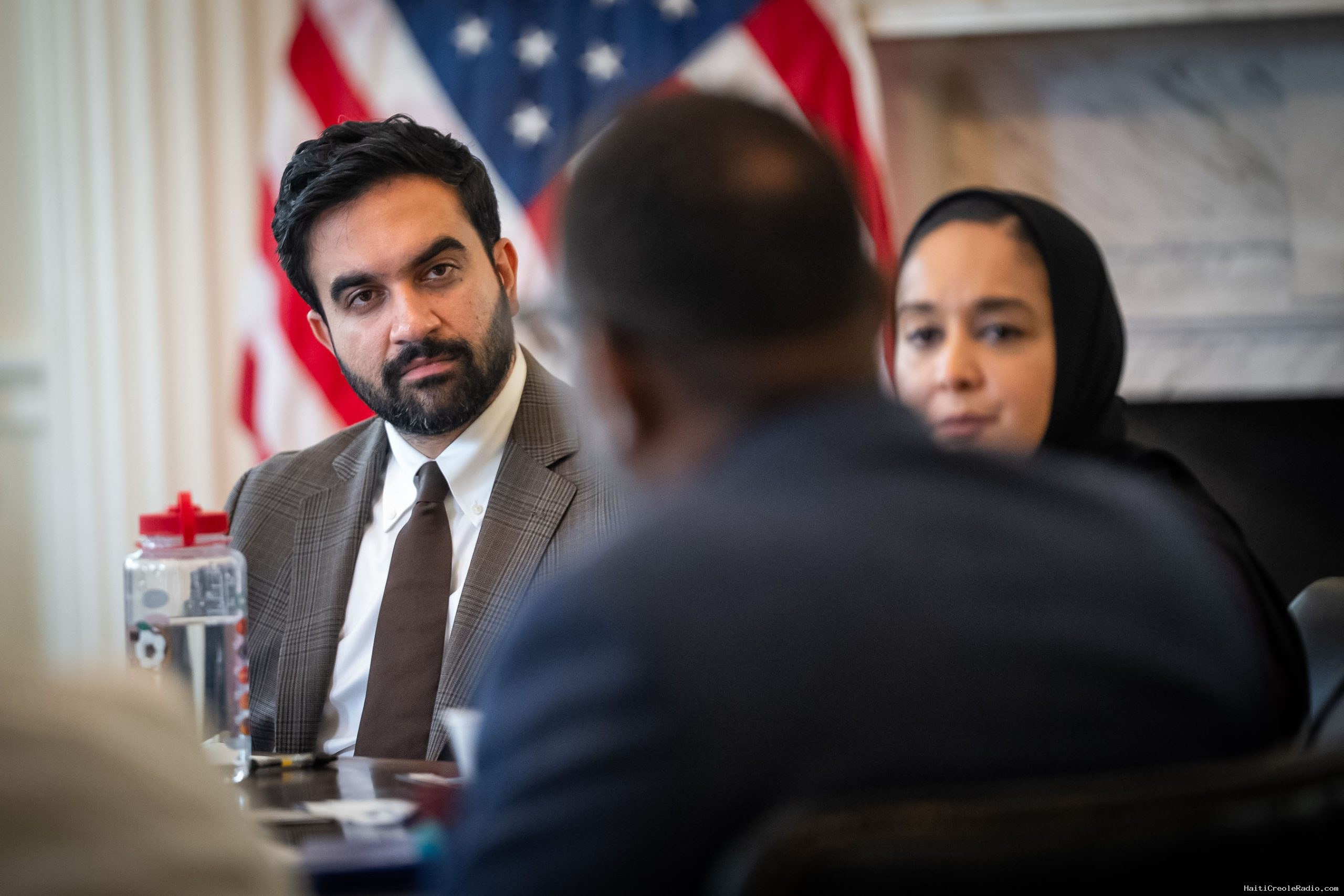
At a press conference Monday ahead of the June 13 primary, Mamdani addressed the remarks, which had been compounded by anti-Haitian comments against Avila Chevalier, whom he had endorsed as a fellow Democratic Socialist.
In response to a question for him to weigh in on the city’s Hispanic leadership and communities, Mamdani rejected the campaign tactics attributed to Espaillat’s team.
“I find unacceptable in our city is the attempt to use the term Haitian as a slur,” Mamdani said. “The trafficking and anti-Black sentiment and narratives that we have seen specifically in New York-13 when it comes to Darializa Avila Chevalier is something that I cannot stand here and say is in line with the values of the city.
“Let the arguments that are made for who deserves whose vote be on the basis of the race itself, not on the race of the candidates or on what communities they are alleged to belong to,” Mamdani continued.
New York is home to one of the largest Haitian and Dominican diasporas in the country. In the city’s 2026 report on immigrants, about 390,000 current residents were born in the Dominican Republic and 85,000 were born in Haiti.

Source: Immigrants from the Dominican Republic tie with China for the top population, while Haiti ties with Colombia for number eight. The Newest New Yorkers: A Portrait A Statistical Portrait of Foreign-born Residents and Their Role in Shaping the City’s Population (2026 edition)
Identity politics migrate too
On her campaign website, Avila Chevalier describes herself as a working-class Afro-Latina and the daughter of Dominican immigrants. She says her advocacy has focused on Black immigrant communities and the criminalization of migration.
In trolling her, some accused Avila Chevalier of being a hypocrite and made assumptions about her being Haitian because of her surname, which is historically French.
Critics say invoking Haitians as a warning reflects a deeply rooted anti-Haitian bias in segments of Dominican political culture, where “Haitian” has long been weaponized to signal Blackness, foreignness or social threat.
For many New Yorkers, especially Haitians, the trolling was immediately recognizable as part of a much older pattern going back to Hispaniola, the island Haiti and the Dominican Republic share.
“The whole racism and colorism that exists in the Dominican Republic, that is why they are going after her,” said Francois Pierre-Louis, a professor of political science at Queens College and international migration studies at the CUNY Graduate Center.
“Racism and bigotry move with them,” he said, referring to immigrants. “There has always been this [anti-Haitian sentiment] from different groups. Caribbean Blacks were against Haitians too in the beginning. Eventually, that has changed as they begin to intermarry. Conservative Dominicans are still behind.”
A 2023 Haitian Times investigation into relations between Haitians and Dominicans found that migration and racial identity continue to fuel hostility between the neighboring nations, often spilling into diaspora communities abroad. The report documented how social media has become a flashpoint for nationalist grievances, especially as anti-Haitian sentiment intensifies alongside migration debates.
Those tensions have deep historical roots. Scholars trace modern anti-Haitianism in the Dominican Republic to the Trujillo era, when Black Haitian identity was systematically stigmatized as incompatible with Dominican nationalism. While generations of Dominicans and Haitians have built lives together in New York, those inherited narratives still surface in moments of political competition, including this week.
Yet, heartening for some to see Mamdani bring it to light as unacceptable.
Marie Lily Cérat, executive director of the Haitian Studies Institute at Brooklyn College, said she appreciates the Mayor addressing the racist rhetoric as a sign that New York has “zero tolerance” for such views.
“We have someone at the helm of this city who is sane and has these humanistic values [that] we hope will create a different environment in this city during his tenure and for years to come,” Cerat said.
“We should all be denouncing these things when they are happening,” Cerat said, referring to attacks on social media against Avila Chevalier. “Progressive Dominicans know better. Anyone who has been in the social justice world, in the human rights world, knows better because they know these things are life and death.”


Commentaires (0)
Laisser un commentaire
Aucun commentaire. Soyez le premier !