
(Français)
The Jul. 21, 2026 hearing of the House Foreign Affairs Committee, titled “Confronting Haiti’s Terrorist Gangs: The Gang Suppression Force and the Path Ahead,” was in many ways a showcase for the arrogance, ignorance, and dishonesty that so often define these exercises in Washington theater.
Representatives postured for the cameras, recycled talking points, and asked “gotcha” questions clearly designed for social media clips rather than accountability. And yet, buried underneath the grandstanding, the two witnesses — veteran State Department official Michael Kozak and Col. Justin Gorkowski of the Pentagon’s Gang Suppression Force (GSF) Tiger Team — let slip a series of striking admissions about the extent of Washington’s command over the latest foreign military intervention into Haiti, and about its quiet partnership with Erik Prince’s mercenary firm, Vectus Global, and the unelected government of de facto Prime Minister Alix Didier Fils-Aimé.
It should be said at the outset that congressional hearings function first and foremost as political posturing opportunities dressed up as oversight. True to form, most Democrats on the committee used their time to highlight the glaring contradiction in the Trump administration’s Haiti policy: the State Department that warns U.S. citizens against traveling to Haiti because it is too dangerous as the Department of Homeland Security simultaneously terminates Temporary Protected Status (TPS) for some 350,000 Haitians. As of this week, Haitians with TPS are subject to deportation.
Salazar’s Theater — And Washington’s Assault on Cuban Medical Solidarity
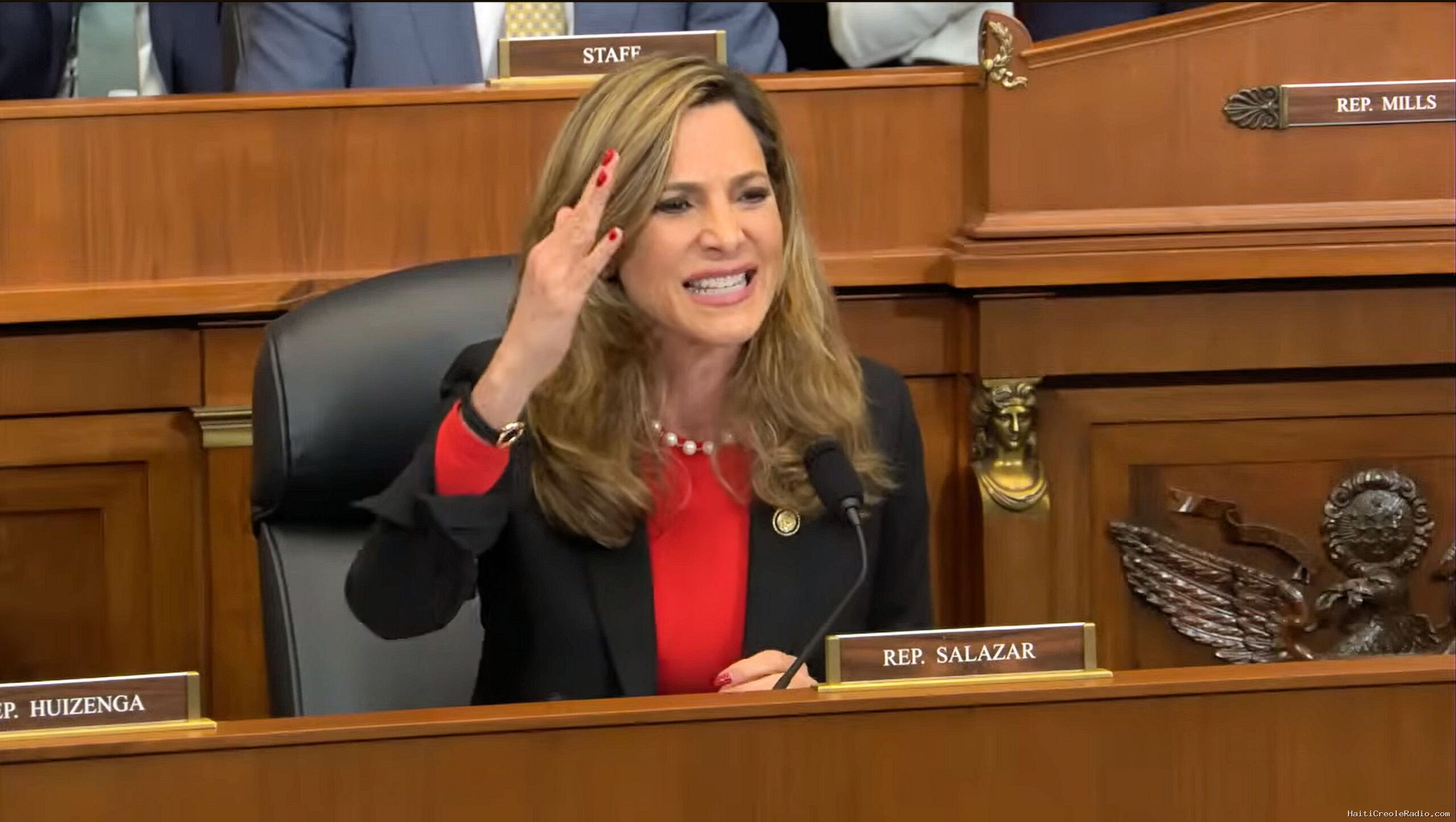
No moment better captured the hearing’s mix of cruelty and spectacle than Rep. Maria Elvira Salazar’s line of questioning. The Miami Republican, who chairs the Western Hemisphere subcommittee, used her time to call — by her own admission, with the explicit goal of making the exchange “go viral” on social media — for Jimmy “Barbecue” Cherizier, the leader of the Viv Ansanm (Live Together) coalition of neighborhood armed groups, to be killed and cooked like a pig on a spit over a fire. It was pure performance, aimed less at Haiti’s crisis than at a domestic audience.
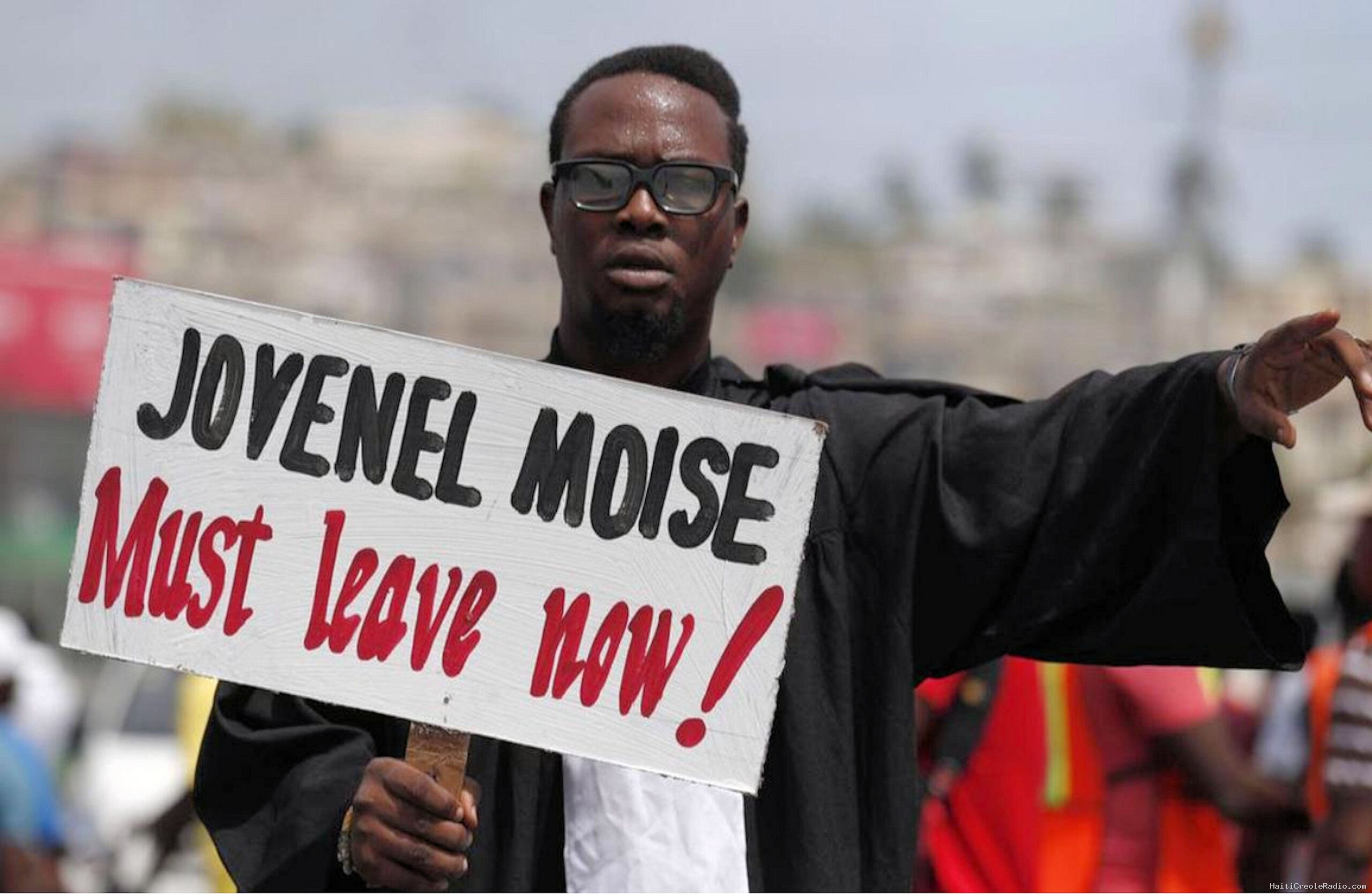
(Immediately after Salazar’s vitriolic presentation, another Florida Republican, Rep. Cory Mills, injected another falsehood: “When we talk about the influence of Barbecue, please note that he was very close to the previous president, which gave him a lot of influence.” Cherizier has repeatedly denied this oft-repeated evidence-free allegation. Cherizier, in fact, had even called for Jovenel Moïse’s resignation.)
But Salazar did not stop there. She pressed Kozak to use U.S. leverage to choke off the flow of payments that fund Cuban medical missions abroad, singling out entities she described as fronts for the Cuban government, and asked him directly when the administration would act.
Kozak’s answer on behalf of the State Department was telling: “one of our high priorities is stopping that program” whereby countries like Haiti pay for Cuban doctors to deploy to their countryside, usually in difficult conditions. He called it “renting slave labor from the Cuban security services.”
“We absolutely share your desire on this,” Kozak concluded.
“So you’re sending the message that those countries cannot be sending any more money?” Salazar pressed.
“Yeah, it’s no more,” a smiling Kozak responded, effectively acknowledging that pressuring sovereign third countries to sever ties with Cuban doctors is now official U.S. policy, not incidental commentary from one lawmaker.
In Haiti, Cuban doctors are beloved, having treated and trained tens of thousands of Haitians over their 30 years of deployment there.
That policy has already claimed victims well beyond Haiti. Governments across the hemisphere and beyond have faced pressure to end Cuban medical cooperation programs, even as some, such as Jamaica’s, have pushed back publicly to defend the value of the Cuban doctors serving their populations. The spectacle of a sitting U.S. representative — echoing Secretary of State Marco Rubio’s own rhetoric — demanding that Washington dictate whether a sovereign nation may accept medical assistance from Cuban doctors is a remarkable, if unremarked-upon, admission of the imperialist mind-set that still governs U.S. policy in the hemisphere. Nowhere in the exchange was there any acknowledgment that Cuban medical missions have for decades filled critical gaps in countries, including Haiti, that Washington’s own aid programs have failed to fill.
Mast’s MSS Fiction and the “Grift” He Won’t Own
Committee Chairman Brian Mast (R-FL) opened the hearing by describing the predecessor Multinational Security Support (MSS) mission as though it were a UN peacekeeping operation. “This is exactly why I advocated for not sending any contributions to the United Nations because this is the kind of boondoggles that they run.” Mast declared.
The statement is patently false, since the MSS was a U.S.-organized and primarily U.S.-funded force that merely carried a UN Security Council blessing, never a UN command structure, UN troops, or UN funding.
Mast also complained that Kenyan personnel, the backbone of the MSS deployment, had “grifted off” U.S. taxpayers — a striking accusation to level at the very troops Washington recruited, armed, and paid to do a job that Washington itself designed and ultimately failed to adequately resource.
Scott Perry’s Uncomfortable Honesty
If there was a moment of real clarity in the hearing, it came from an unlikely source: Pennsylvania Republican Scott Perry. He laid out, with unusual bluntness for a member of that party, the pattern of failure that has defined the last four years of U.S.-driven intervention. He noted that the 2024-deployed Kenyan-led mission had already cost roughly a billion dollars in security assistance, with another $300 million pledged, and that by nearly every measure it had been undermanned, underfunded, and ineffective.
Now, he said, Washington’s answer was simply to “relabel” the effort as the Gang Suppression Force and try again with a larger troop target. Perry asked the committee, and by extension the U.S. public, why anyone should expect a different result from what he called the fourth or fifth iteration of the same basic model — foreign troops, foreign funding, and weak Haitian institutions propped up indefinitely — when every metric of Haitian state capacity has deteriorated, not improved, since Washington first got involved.
It is a rare thing for a Republican hardliner to hand Haiti solidarity activists their own argument almost verbatim. But Perry’s framing — that the problem is not troop numbers or funding levels but the entire model of externally imposed, externally controlled security intervention — is precisely the critique that Haitian and international anti-imperialists have made for decades.
Oddly, Issa Gaslit by Kozak Over the 2004 Coup
Rep. Darrell Issa (R-CA), pressing Kozak on the history of U.S. intervention in Haiti, asked the State Department official the following question: “As far back as 2004, we have had to use, you know, force or threat of force to realign Haiti at times, including the removal of their president. That’s just a piece of history, right?”
Probably surprised, and very much a player in that 2004 ouster, Kozak replied: “I don’t recall us removing their president.”
In fact, that is historically false. Aristide never condoned the necklacing of political opponents, and Washington encouraged a coup against him in 1991 because he had a mildly nationalist program at that time. But here is how Kozak deceitfully spun it.
“You’re right about the neck ties, necklaces as they called it. But he was doing that before there was a coup against him in the 1990s. We helped put him back in power again. Then interestingly, he was one of the people who really decimated the Haitian security forces. He had an opportunity to have a good clean force and instead drove out most of the good people and tried to rule with gangs. And as I recall in 2004, what caused his departure is that he had, he and one of his gang colleagues, had killed a gang leader, and the guy’s brother, who was head of something called the Cannibal Army, marched on Port-au-Prince. And President Aristide was like, ‘Okay, where are the troops to save me?’ And the answer was, ‘You got rid of them.’ And so the U.S. helped him escape, but we did not remove him.”
Kozak’s historical account is a lie. The U.S. removed Haiti’s sitting, elected president. Aristide himself has long described his 2004 departure as a “modern-day kidnapping” carried out by U.S. forces, not a voluntary evacuation from a crisis he alone created.
Kozak’s twisted account is a textbook example of how State Department officials continue to launder a well-documented history of U.S.-engineered regime change in Haiti, just as they doctor the narrative of the current situation in Haiti.
Baird’s Fantasy History
If Kozak’s account of 2004 was carefully spun, Rep. James Baird (R-IN) offered something cruder: outright historical fabrication, delivered with the confidence of a man who has clearly never read a page of Haitian history. Defending the record of U.S. intervention, Baird told the committee: “We continued our support for a democratic Haiti and first in 1994 and then in 2004 the U.S. military stepped in to prevent military coup and the attempts against the democratically elected president Jean Bertrand Aristide.”
It would be difficult to compress more distortion into a single sentence. In 1991, Aristide — Haiti’s first freely elected president — was overthrown in a military coup backed by elements the United States had trained and funded for decades; Washington’s restoration of Aristide in 1994 came only after three years in which it had supported and protected the same coup regime it later helped dislodge.
In 2004, the U.S. did not “step in to prevent” a coup against Aristide — it participated in one. U.S. and French officials pressed Aristide to resign amid an armed uprising by former soldiers and death-squad leaders that Washington enabled. A U.S. SEAL team then flew Aristide and his wife, against their will, out of the country to the Central African Republic. Members of the Congressional Black Caucus said as much at the time — the opposite of Baird’s claim that U.S. forces “prevented” his overthrow.
That Baird could stand before the House Foreign Affairs Committee in 2026 and simply invert the historical record — casting the United States as Aristide’s protector in the very two episodes where it did the most to remove him — went entirely unchallenged by the chair, sitting just a few seats away from Baird as he spoke. It is worth dwelling on, because it is not an isolated gaffe. It is the institutional memory Washington has settled on for its own role in Haiti: erase the coups, keep the “democracy promotion,” and let a member of Congress recite the sanitized version into the official record, immediately after the same record had just been contested, however evasively, by the administration’s own witness.
Gorkowski’s Admission: This Was Never About Crime
The hearing’s most consequential admission came from Col. Justin Gorkowski, who laid out in unusually explicit terms how the GSF was designed. It was built with the lessons of 11 prior multinational interventions in mind and differs from its predecessors in mission and scale: projected to be more than five times larger than the MSS, it is structured as roughly four-fifths military and one-fifth police, with air, land, and maritime components.
Crucially, Gorkowski stated that earlier missions had “mischaracterized the problem.”
“They thought of this as a criminal problem,” he said. “It is not. This is a proto-insurgency, and these folks really are on the verge of something significant if we can’t stem the tide.”
In other words, this is a political uprising, and we have to crush it as quickly and savagely as we can. The “proto-insurgency” characterization reframes the entire intervention as a counterinsurgency campaign rather than a policing operation, with all the escalation in tactics, secrecy, and lethal force that designation implies.
This is not a minor rhetorical shift. Recasting Haiti’s crisis as an insurgency, rather than organized crime, is the same conceptual move Washington has made in countless other theaters to justify open-ended military engagement, expanded rules of engagement, and reduced transparency. Gorkowski also confirmed that, unlike the MSS, GSF troop-contributing countries deploy with their own equipment rather than relying on U.S. drawdown authority — a technical-sounding detail that in practice means Washington has restructured the mission specifically to avoid the visible U.S. equipment trail that dogged the MSS, while still designing, staffing, and overseeing the force’s command structure through what Gorkowski described as a “special representative and staff” positioned to “observe and control critical functions.”
No Evidence for the Boat Strikes
One of the most heated exchanges occurred when Rep. Madeleine Dean (D-PA) pressed Kozak for evidence justifying the almost six dozen deadly boat strikes carried out under Operation Southern Spear in the Caribbean and Eastern Pacific.
“The administration’s boat strike campaign has the stated purpose of stopping the flow of illicit drugs to the U.S.. There’s a problem with that premise. The president keeps talking about fentanyl on these boats… What evidence have you produced that these were boats carrying illicit drugs to the United States?” she asked. “Where’s the evidence?”
“We have had so far 221 dead, 66 strikes” Dean continued. “That’s only as of July 1st. There were four strikes in June alone that killed 16 people. Congress has received no evidence [for] these extrajudicial killings… When will you, in your capacity, provide us that evidence? The Department of Defense, as it is named currently, hasn’t given us any briefings either. But you owe us briefings.”
In short, Kozak could give no substantive answer. The exchange underscored a recurring pattern in the hearing: officials were far more comfortable describing the architecture of U.S. control than justifying the human cost of the operations that architecture has produced.
Mills Explains the “Need” for Mercenaries
Perhaps the most unguarded moment of the hearing came from Rep. Cory Mills (R-FL), a war veteran turned lawmaker, who offered an explanation for why the administration favors private contractors over conventional forces in Haiti: mercenaries are not bound by the Uniform Code of Military Justice. Mills argued that this freedom from military law lets operators “resolve” situations that formal restrictions would otherwise prevent, describing the arrangement as a feature rather than a liability.
“We have to recognize that sometimes in warfare,… there are certain restrictions and handcuffs on us [and] without that, we could resolve [things] very quickly,” he said.
At the same time, he cautioned that mercenaries must be used carefully. “I don’t want another Nissor Square incident,” he said. “I don’t want another outrage in a country where we actually cause more diplomatic damage and more destabilization. And America’s been great at destabilizing nations like Afghanistan and Iraq for 20 plus years. And I certainly don’t want us to see a prolonged war again.”
It was a rare public acknowledgment, from a sitting member of Congress, that the appeal of mercenary forces lies precisely in their ability to operate outside the accountability structures that govern uniformed U.S. personnel, or a UN Security Council-authorized multinational force like the GSF — a point Haiti’s human rights monitors have been making for over a year about Vectus Global’s drone campaign, which has killed hundreds of innocent civilians, including children, in strikes that have never been subject to the kind of review a military operation would require.
Who Actually Runs the GSF
For all the talk of a “UN-backed” multinational force, the hearing made unmistakably clear that command and control of the GSF sits in Washington, not with the United Nations, not with Chad, Sri Lanka, or Bangladesh, not with the GSF’s titular chief, Mongolian Major General Erdenebat Batsuuri, and certainly not with the rump Haitian government the force is nominally there to serve.
Gorkowski’s own account of the deployment — offered almost as an aside, as though it were a routine logistical matter rather than an admission of who actually calls the shots — described the GSF’s contributing units being assigned to Haiti’s departments the way a headquarters staff assigns units to sectors on a map: Chadian troops given responsibility for the West Department around Port-au-Prince, Sri Lanka’s combat unit sent to the Artibonite, and Bangladesh’s contingent posted to Mirebalais on the Central Plateau. The UN Support Office in Haiti (UNSOH) exists to provide logistics — rations, fuel, transport — but the operational planning, the sector assignments, and the “special representative and staff” positioned to “observe and control critical functions,” in Gorkowski’s own words, run through the Pentagon’s Tiger Team. Whatever flag flies over the mission’s letterhead, the chain of command runs to Washington.
“A Tremendous Partner”: The Pentagon-Vectus Connection, Confirmed
It was in this context that Gorkowski offered the hearing’s single most damning admission. Describing the relationship between the GSF and the Haitian government’s drone-strike Task Force, effectively run by Erik Prince’s Vectus Global, Gorkowski told the committee, without apparent hesitation, that the Task Force was “a tremendous partner,” and that a Task Force liaison officer would soon be embedded directly inside the GSF’s own joint operations center.
Set aside the diplomatic language for a moment and look at what the statement actually describes: a U.S.-designed, Pentagon-directed multinational force integrating a mercenary-linked kill unit (which doesn’t follow the Uniform Code of Military Justice) into its command structure, with a shared operations center through which targeting and coordination will flow. This is not distant, arm’s-length cooperation between separate Haitian and international efforts. It is operational fusion, confirmed on the record by the U.S. colonel who co-leads the GSF’s oversight team.
Rep. Joaquin Castro (D-TX) pressed Gorkowski on the human cost of that partnership — the Vectus Global/Task Force’s drone campaign has been linked by Human Rights Watch to more than 1,200 deaths across some 141 strikes between March 2025 and January 2026, including 43 civilian adults and 17 children, with hundreds more wounded. Gorkowski’s response was a study in convenient ignorance: he told Castro he was not aware of specific civilian casualty figures, insisting only that his team did “everything it could” to mitigate risk.
Rep. Sydney Kamlager-Dove (D-CA) picked up where Castro left off, pressing Kozak on the underlying legal architecture: who actually authorizes Vectus Global’s operators to participate in lethal drone strikes on Haitian soil, and under what license. Kozak’s response was a masterclass in bureaucratic stonewalling. Asked directly about the firm’s licensing status, he told the committee: “We cannot confirm or deny whether any particular license has been issued to any company or not.” Pressed further on why the State Department could not simply say whether Erik Prince’s firm was operating lawfully, Kozak retreated behind the department’s lawyers, indicating he had been advised he was not free to discuss licensing matters for a specific company in open session.
Kamlager-Dove’s exchange with him made explicit what Castro’s had only implied: a senior State Department official, testifying under oath before elected representatives of the U.S. public, would not or could not say whether the mercenary force implicated in more than 1,200 deaths — including at least 17 children — is legally licensed to operate at all.
Perhaps the most self-incriminating line of the day came almost as a throwaway. Pressed further on the mounting death toll, Gorkowski offered, unprompted, that Task Force strikes were becoming “more and more discriminate.” It is worth sitting with that phrase. To describe strikes as becoming “more discriminate” is to concede, by definition, that they were not discriminate before — that for months, drones operated by or alongside Vectus Global personnel were killing Haitians, without any distinction between armed group soldiers and civilians going about their lives.
Gorkowski did not appear to intend this as a confession. He offered it as reassurance. That a Pentagon officer could describe a mounting civilian body count as evidence of improving practice, in testimony to the U.S. Congress, tells you more about how Washington actually regards Haitian lives inside this “partnership” than any amount of official messaging about UN mandates and human rights safeguards ever could.
Taken together — the sector assignments handed down from the Tiger Team, the embedded liaison officer, the “tremendous partner” language, the feigned ignorance of the casualty count, and the lawyered-up silence on licensing — the hearing did more than any prior public accounting to confirm what Haitian human rights monitors and independent reporting have argued for over a year: that the Pentagon-run GSF and Erik Prince’s mercenary task force are not two separate Haitian and international efforts operating in parallel, but a single, fused security apparatus, commanded from Washington, that has killed Haitian civilians on a mass scale with no meaningful public accountability.
The Irony That Outlasts the Hearing
What will likely be remembered from this hearing is Salazar’s provocative call for Cherizier to be killed and roasted. What deserves to be remembered is the irony embedded in that moment: much of the Haitian “ultra-left,” which has spent years belittling and ridiculing Cherizier’s calls for a revolution by or dialogue with the slums’ poor masses, has arrived at strikingly similar demands for his crucifiction — a convergence between a rabidly anti-communist Miami Republican and segments of Haiti’s armchair revolutionaries that says more about the collapse of Haiti’s political landscape than either side might care to admit.
Taken together, the hearing offered less a picture of oversight than a rare, if unintentional, admission of how thoroughly Washington has built, staffed, and directed Haiti’s latest military intervention — from the design of the GSF itself to its quiet integration with Erik Prince’s mercenaries and the unelected government they keep in power in an attempt to prevent a “proto-insurgent” revolution.

Commentaires (0)
Laisser un commentaire
Aucun commentaire. Soyez le premier !