
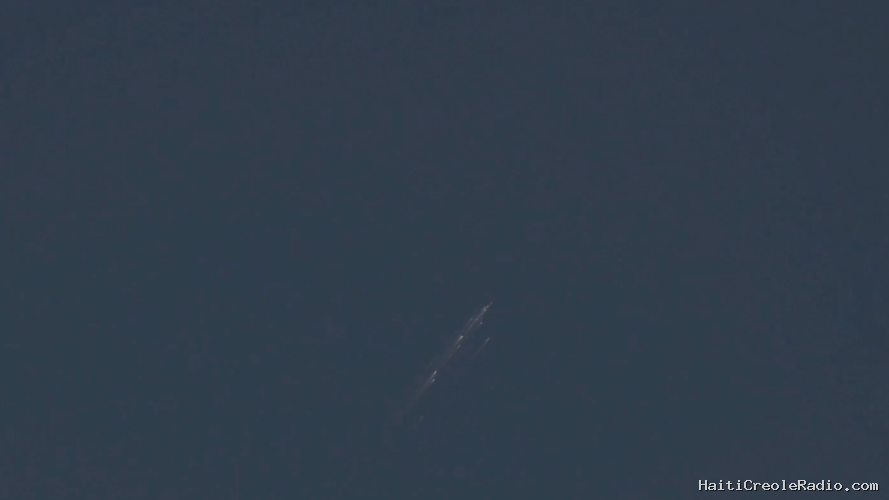
Yesterday, on 31 August 2026, Samba reentered Earth’s atmosphere at 21:39:38 UTC / 23:39:38 CEST as the third of the four Cluster satellites. Samba had been lined up for a special 'targeted reentry' safely over the South Pacific Ocean, the precision so high that a plane could fly out from Tonga and successfully record its demise for reentry science.
Samba’s trajectory had been changed by its mission control team already in November 2024 to ensure a safe, remote reentry over the Pacific Ocean. It was then adjusted slightly in January 2026 so a plane full of scientists and their instruments could fly out to observe it. The spacecraft’s own data and location were combined with observations made with telescopes to predict its reentry time and location as precisely as possible.
The final prediction turned out to have been accurate to the second, reflecting the lessons learned from the first two targeted reentries of Cluster satellites Salsa and Rumba.
The reentry image from the plane was made with a so-called tracking camera, used to confirm that Samba is where it is supposed to be. It shows the surroundings, providing context such as the state of fragmentation and relative positioning of the fragments. The tracking cameras are complemented by other instruments that look for the presence of specific materials in the same field of view. This then helps scientists identify which part of the spacecraft we are looking at on their quest to understand how exactly the demise takes place.
Processing the data and images collected onboard the plane, caught by 29 of the 30 instruments, takes time. The ROSIE team, 11 hours ahead of Central European Time, has to prioritise sleep and the preparations to repeat the observation experiment once more with Tango.
We can expect to see more, including video footage, once the Tango reentry has also been observed later tonight.
Value of reentry science
“With better data on exactly when and how reentering satellites heat up, break up, and which materials survive, engineers can design satellites that burn up completely, so-called design-for-demise satellites, while also preventing pollution of the atmosphere,” says Stijn Lemmens, acting Head of Space Debris at ESA.
“This reentry data is very hard to get. So much work has gone into this experimental project, but we have managed to capture the entirety of Samba’s demise – crucially relying on us implementing the lessons learned from the Salsa campaign back in 2024 – supplying us with a wealth of data. The entire team, from the many involved in determining and ensuring the precise trajectory of Samba to the ROSIE team flying out to meet it on a plane, can be so very proud today.”
Saying goodbye to Samba
Today and tomorrow are days of mixed feelings at ESOC, ESA’s European Space Operations Centre in Darmstadt, Germany. The official end to the Cluster mission was in 2024, but its data continues to bring scientists together, as do the final reentries of the last two satellites. The Cluster 'family' has gathered one more time to celebrate all the memories and achievements and share the bittersweet moment of goodbye.
Yesterday, Cluster’s flight control team sent their last commands to Samba, each saying goodbye, until it was time for the spacecraft to reenter. The team lost the final signal from the spacecraft via Kourou for the very last time at 23:26 CEST.
Tonight, they will communicate with Tango once more, sending the final commands and receiving the very last of the telemetry of the Cluster mission.
Time to Tango
Today, the story will unfold its final act with the very last Cluster reentry of Tango. Its reentry is predicted for today, 1 September, 21:30:31 UTC / 23:30:31 CEST, with an uncertainty left of +/- 10 seconds either way.
You can follow along the action on our live blog.



Commentaires (0)
Laisser un commentaire
Aucun commentaire. Soyez le premier !